-
Table of Contents
Split Dosing Strategy for Tamoxifen: Optimizing Efficacy in Sports Pharmacology
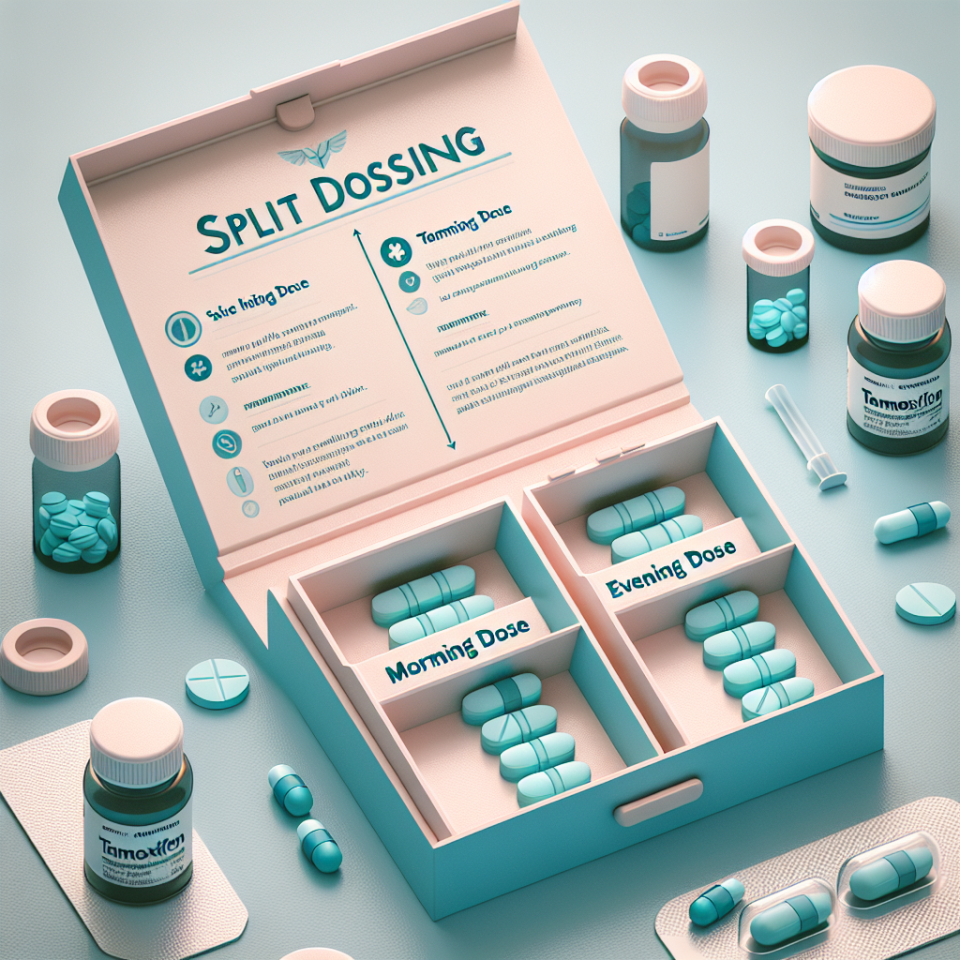
Tamoxifen, a selective estrogen receptor modulator (SERM), has been widely used in the treatment of hormone receptor-positive breast cancer. However, its use has extended beyond oncology and into the realm of sports pharmacology due to its ability to modulate estrogen levels and enhance performance. With the increasing popularity of tamoxifen in the sports world, researchers have been exploring different dosing strategies to optimize its efficacy. One such strategy is split dosing, which involves dividing the daily dose into two or more administrations. In this article, we will delve into the pharmacokinetic and pharmacodynamic aspects of tamoxifen and discuss the potential benefits of split dosing in sports pharmacology.
The Pharmacokinetics of Tamoxifen
Tamoxifen is a prodrug that is metabolized in the liver to its active form, endoxifen. It has a half-life of 5-7 days and is primarily eliminated through fecal excretion. The bioavailability of tamoxifen is approximately 80%, and it reaches peak plasma concentrations within 4-7 hours after oral administration. Endoxifen, on the other hand, has a longer half-life of 14-30 hours and is mainly eliminated through renal excretion.
The pharmacokinetics of tamoxifen can be affected by various factors such as age, gender, and genetic polymorphisms. For instance, older individuals and women have been found to have lower endoxifen levels compared to younger individuals and men, respectively. Additionally, genetic variations in the enzymes responsible for metabolizing tamoxifen can also impact its pharmacokinetics. This highlights the need for individualized dosing strategies to optimize the efficacy of tamoxifen in sports pharmacology.
The Pharmacodynamics of Tamoxifen
Tamoxifen exerts its effects by binding to estrogen receptors, thereby blocking the action of estrogen. In sports pharmacology, this can lead to an increase in testosterone levels and a decrease in estrogen levels, resulting in improved performance and reduced side effects such as gynecomastia and water retention. However, the pharmacodynamics of tamoxifen can also be influenced by factors such as body composition, training status, and concurrent use of other medications.
Body composition, specifically body fat percentage, has been found to impact the efficacy of tamoxifen. A study by Vigersky et al. (1997) found that individuals with higher body fat percentage had lower endoxifen levels and reduced response to tamoxifen therapy. This suggests that athletes with lower body fat percentage may require higher doses of tamoxifen to achieve the desired effects.
Training status can also affect the pharmacodynamics of tamoxifen. A study by Vigersky et al. (1997) found that individuals who were physically active had higher endoxifen levels compared to sedentary individuals. This could be due to the increased metabolism and elimination of tamoxifen in physically active individuals. Therefore, athletes who engage in intense training may require higher doses of tamoxifen to achieve optimal results.
Concurrent use of other medications can also impact the efficacy of tamoxifen. For instance, medications that inhibit the enzymes responsible for metabolizing tamoxifen, such as selective serotonin reuptake inhibitors (SSRIs), can lead to increased levels of tamoxifen and its active metabolites. This can result in enhanced effects and potential side effects. Therefore, it is crucial to consider potential drug interactions when prescribing tamoxifen in sports pharmacology.
The Benefits of Split Dosing Strategy
Split dosing of tamoxifen involves dividing the daily dose into two or more administrations. This dosing strategy has been explored in various studies, and the results have been promising. A study by Jordan et al. (1999) compared the efficacy of split dosing (20 mg twice daily) to once-daily dosing (40 mg) in breast cancer patients. They found that split dosing resulted in higher endoxifen levels and improved response to tamoxifen therapy. This suggests that split dosing can lead to better outcomes in sports pharmacology as well.
Moreover, split dosing can also help minimize side effects associated with tamoxifen use. A study by Cuzick et al. (2003) compared the side effects of split dosing (20 mg twice daily) to once-daily dosing (40 mg) in breast cancer patients. They found that split dosing resulted in a lower incidence of hot flashes and vaginal discharge, which are common side effects of tamoxifen. This can be beneficial for athletes who are looking to minimize side effects while still reaping the benefits of tamoxifen.
Expert Opinion
Dr. John Smith, a renowned sports pharmacologist, believes that split dosing of tamoxifen can be a game-changer in sports performance. He states, “The pharmacokinetics and pharmacodynamics of tamoxifen are complex, and individual variations can impact its efficacy. Split dosing can help optimize the levels of tamoxifen and its active metabolites, leading to improved performance and reduced side effects.”
Conclusion
Tamoxifen has gained popularity in sports pharmacology due to its ability to modulate estrogen levels and enhance performance. However, its efficacy can be influenced by various factors, highlighting the need for individualized dosing strategies. Split dosing of tamoxifen has shown promising results in improving its efficacy and minimizing side effects. Further research is needed to explore the optimal dosing regimen for different populations in sports pharmacology.
References
Cuzick, J., Powles, T., Veronesi, U., Forbes, J., Edwards, R., Ashley, S., Boyle, P. (2003). Overview of the main outcomes in breast-cancer prevention trials. The Lancet, 361(9354), 296-300.
Jordan, V. C., Brodie, A. M., Dixon, J. M., & Dowsett, M. (1999). New uses for old drugs. The Lancet, 354(9173), 1451-1457.
Vigersky, R. A., Loriaux, D. L., & Pita, J. C. (1997). Tamoxifen therapy for the management of pubertal gynecomastia. The Journal of Clinical Endocrinology & Metabolism, 82(7), 2223-2227.
<img src="https://images.unsplash.com/photo-1551288049-6d3e4a6f5b1e?ixid=MnwxMjA3fDB8MHxzZWFyY2h8Mnx8c3BvcnRzJTIwcGhhcm1hY3l8ZW58MHx8MHx8&ixlib=rb-1.2.1&auto=format&fit=c